Monday, July 27, 2026

Bird Bricks in Scotland

Bird bricks made the news this year when Scotland bacame the first UK country to mandate their use in all new buildings (The Guardian, BBC, RSPB). Similar legislation has faced more obstacles in England (The Guardian). In the Netherlands, the bricks are known as neststenen or nestkasten, and were supposed to become mandatory on new construction, but the regulation was scrapped at the last minute, though their use is encouraged.

Bird bricks are used for urban cavity nesters such as swifts, starlings, and house sparrows--which are all in steep decline in many European countries (See Swift-Conservation.org).
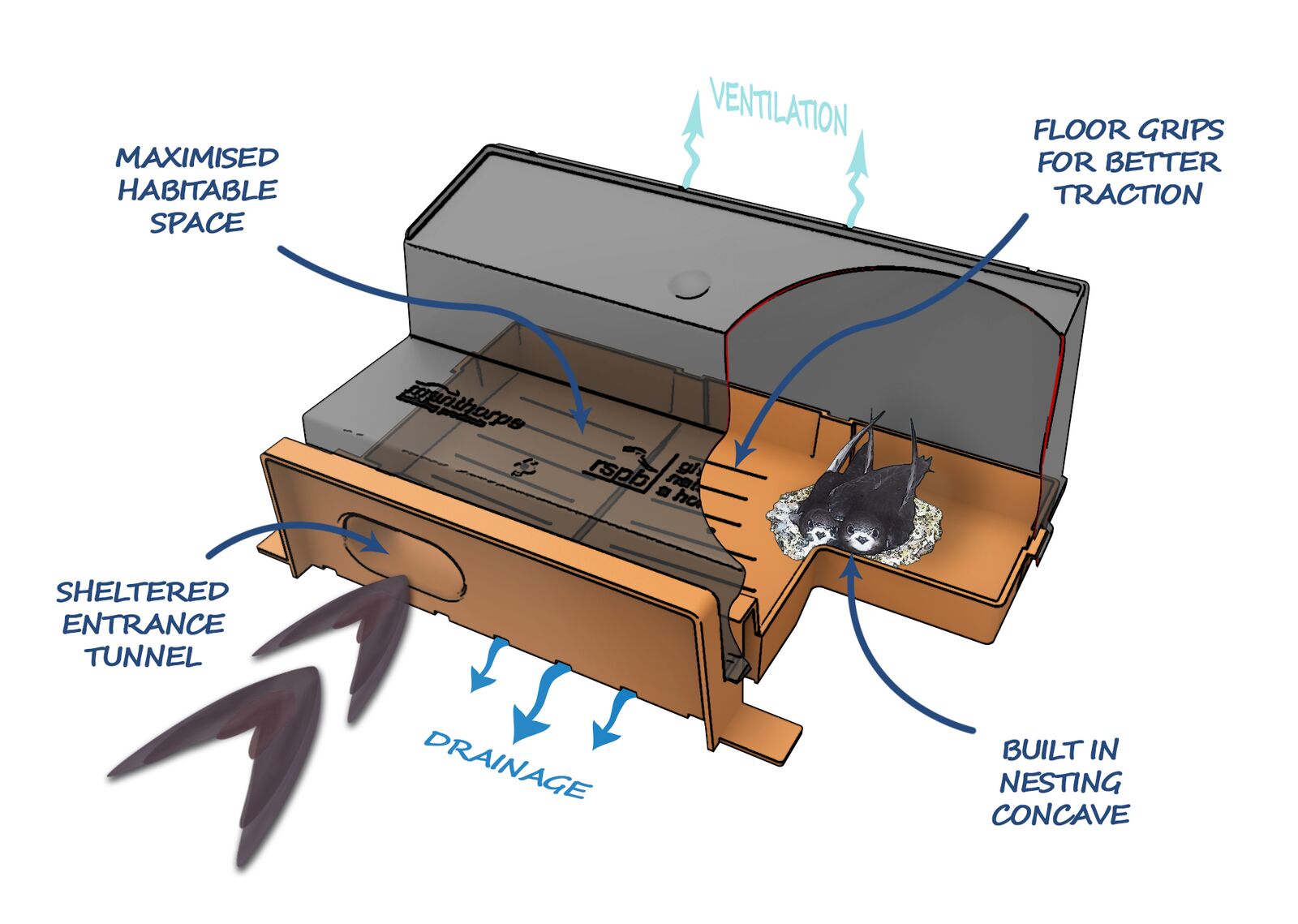
Check out this swift brick here

Wednesday, April 22, 2026

American Bird Conservancy Urban & Suburban Habitat Site


Last November the American Bird Conservancy (ABC) revamped their webswite, which now includes a new section dedicated to Urban and Suburban Habitats.  For decades ABC has been the leader in addressing hazards birds face in urban areas, such as outdoor cats, collisions with glass, and pesticides. Looking forward to seeing if this new web page (first crawled by the Internet Archive Wayback Machine last November 13) signals an increased focus on urban and suburban birds and habitats. 


Thursday, March 27, 2025

UrbanBirdscapes.com to Close

After keeping UrbanBirdscapes.com on life support on its own URL, I've let that go and will resurrect it here on Blogger. Posts from 2011-2024 can be found at the Interet Archive.


Friday, April 30, 2010

Urban Birdscapes and Audubon Birdscapes Resurrected as UrbanBirdscapes.com

Back in a new improved form, you can find the latest on making cities good for birds and people at UrbanBirdscapes.Com.

UPDATE 2025
After Audubon closed my Urban Bird Conservation program, and closed down my Audubon Birdscapes blog, I created UrbanBirdscapes.com in 2010 to keep the urban bird conservation conversation going. Facebook became more of a center of attention and blogging largely fell away by the wayside, as did much of my attention from keeping up the blog.

Monday, March 03, 2008

Audubon Birdscapes

At long last, I'm finally up and running with Audubon Birdscapes, where I can continue publishing the latest news and comments on how to make our yards, neighborhoods, and communities better for birds. So thanks for stopping by, but make sure to head over to Audubon Birdscapes to continue your birdscaping aspirations.

UPDATE 2025
So Audubon Birdscapes was a great forum for my Urban Bird Conservation program at Audubon. That program started as Audubon At Home, but when management of that program moved from the Science division to Education, I was appointed Senior Scientist for Urban Bird Conservation. Sadly, that program and my position ended in 2009 with budget cuts related to the Great Recession of 2008.

Many Audubon Birdscapes posts are available on the Internet Archive.

Wednesday, June 01, 2005

Hiatus

I haven't updated this blog since I took a job coordinating the Audubon At Home program for the National Audubon Society science office. I hope to have an Audubon at Home blog set up at that site this Summer for urban bird conservation news and information. Meanwhile, you can check out my personal birding blog at birdchaser.blogspot.com.

Monday, October 18, 2004

Urban Wildlife Code in Jamaica

Urban Wildlife Code in Jamaica
According to a recent news report, Jamaica has adopted an Urban Wildlife Code as part of its development process. I'll post on this again when more info is available.

Tuesday, October 05, 2004

Wildlife and Urban Growth Management in Washington State


Joseph W. Tovar, director of special projects at the Northwest Center for Livable Communities at the University of Washington has an op ed piece in the Seattle Times discussing the history of Washington's growth management act. This legislation gives teeth to regions and communities trying to control growth in ways that can sustain wildlife and higher qualities of life. This op ed emphasizes the importance of planning for appropriate density, designing for density, and funding the public realm.

Wednesday, September 08, 2004

West Nile Hits Birds in Southern California


A recent Los Angeles Times story details the devestation West Nile is causing to bird populations in Southern California. California Condors have been immunized, but smaller native birds are at risk.

Wednesday, September 01, 2004

Parakeets Make The Times


Urban Monk Parakeets were featured in yesterday's New York Times. The article discusses the challenges of urban bird congregations such as parakeet colonies on electric structures and Canada geese in parks.

Monday, August 30, 2004

Birds and Sprawl in Southern Oregon


According to a recent report in The Oregonian, residents of the small town of Brookings are concerned about a new urban development that may threaten their way of life and rare Marbled Murrelets. The story illustrates the lengths development companies go to in preparing their site plans, including millions of dollars in studies and site improvements before building a master-planned community. Local residents often feel overwhealmed when facing development companies with millions of dollars to spend.

Friday, August 27, 2004

Adaptive Conservation Strategies


The Point Reyes Bird Observatory (PRBO) has published DEVELOPING AND IMPLEMENTING AN ADAPTIVE CONSERVATION STRATEGY: A guide for improving adaptive management and sharing the learning among conservation practitioners. The guide features five case studies, as well as information on achieving conservation results, monitoring, partnership building, communication, fundraising, and how to create a plan. The suggestions in this guide could be implemented at various landscape levels, including neighborhoods, municipalities, counties, and Metropolitan Statistical Areas.

Wednesday, August 25, 2004

Urban Planning for Wildlife in Minnesota


A model urban planning effort involving wildlife is Metro Greenprint: Planning for Nature in the Face of Urban Growth. Published in 1997, this citizen's report offered suggestions on how to plan for greenspace and wildlife in the Minneapolis/St. Paul area. In 1998, this effort led to the establishment of a Metro Greenways program run by the Minnesota Department of Natural Resources.

Resources developed for this program include an innovative Land Cover Classification System that includes urban development, vegetation types and species, and soils. The program also provides resources on maintaining roadsides for wildlife and Metro wildlife corridors.

Saturday, August 14, 2004

Western Riverside County Multiple Species Habitat Conservation Plan (MSHCP)
According to an August 13 story in The Desert Sun (Palm Springs, California):
"The nation’s fastest-growing large county has won approval to protect dozens of threatened and endangered species by locking out developers from a half-million acres of land.

Anti-sprawl groups, environmentalists and builders worked together on the conservation proposal, part of Riverside County’s nationally recognized effort to integrate planning for development of roads and homes with protections for delicate wildlife and plant habitat."

The Western Riverside plan is the latest MSHCP and Riverside County is sited as a model for urban conservation planning for wildlife. The plan requires the purchase of 153,000 acres from willing sellers in the next 25 years at an estimated cost of more than $812 million.

The cost will probably go up, and other plans (including the much celebrated Balcones Canyonlands Conservation Plan in Austin, Texas--more here) have been difficult to complete as public land purchases have tended to fuel higher land prices as unpurchased land becomes scarce.

Defenders of Wildlife has published an important evaluation of the problems in using the Endangered Species Act for conservation planning--see Frayed Safety Nets: Conservation Planning Under the Endangered Species Act by Laura C. Hood.

Friday, August 13, 2004

Recent News Stories


There have been some interesting recent urban bird conservation stories in newspapers around the country. Joan Lowy of the Scripps Howard News Service has a story out on green lawns and the move to ban or reduce pesticide use on lawns--at least partially spurred on by concerns about birds being killed in residential areas. The Portland Tribune has a story about Portland's famous urban Vaux's Swifts. The Canadian mining firm Phelps Dodge has been fined $15,000 for bird deaths at one of their Arizona operations. There's also a story about the damaging implications of the Bush administration's Healthy Forest Initiative.

Portland Oregon's metropolitan planning for wildlife continues to draw debate, as evidenced in a recent Oregonian opinion piece by Jim Irvine, chairman and chief executive officer of the Conifer Group and past president of the National Association of Home Builders.

While it is easy to feel like urban bird and wildlife issues are back burner to other social problems, there are efforts around the country to address the needs of urban birds and wildlife. While I try to keep up with events and stories such as these in local newspapers, feel free to send me any stories I may have missed.